
The Radiology Department is staffed 24/7 for inpatient and Emergency Department patients; it is available for outpatients Monday – Friday 7a-5p.
Services available are:
- Diagnostic Radiology
An X-ray is a picture of the inside of your body. The X-ray can show bones, organs, or air and fluid. Any part of your body can be X-rayed, including your head, chest, belly, arms, and legs.
- CT Scan
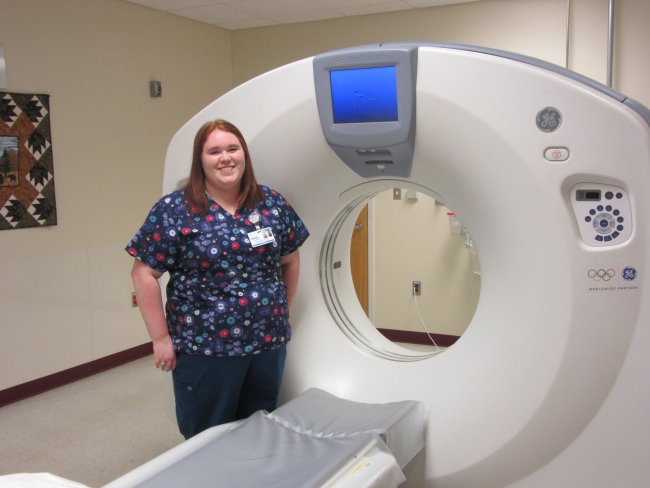
A computed tomography (CT) scan uses X-rays to make detailed pictures of parts of your body and the structures inside your body. The CT scanner is a large circular machine.
- 3D Digital Tomosynthesis Mammography (Accredited through the American College of Radiology – a three-year accreditation) (MQSA inspection through the FDA approved)
A mammogram is an X-ray of the breast that is used to screen patients for breast cancer. This test can find tumors that are too small for you or your doctor to feel.
- Nuclear Medicine
Nuclear medicine uses very small amounts of radioactive materials to diagnose medical problems and diseases. Patients are given radioactive material orally, or through an injection. The test or scan provides images of the body’s organs and other areas that cannot be seen well with a standard X-ray.
- Bone Density
Bone density is a measurement of the concentration in bone of minerals (mostly calcium and phosphate) that are vital for strong bones. A high bone density means above-average amounts of calcium and phosphates in the bones, while a below-normal bone density might mean you have low bone density (sometimes called osteopenia) or osteoporosis.
- Ultrasound
Ultrasound is a test that uses reflected sound waves to produce an image of organs and other structures in the body. It does not use X-rays or other types of possibly harmful radiation.
- Echocardiography
An echocardiogram (echo) is a non-invasive, radiation-free, 30–60-minute ultrasound test that uses sound waves to create live, moving images of the heart’s chambers, valves, and walls. It is used to assess pumping function, detect tissue damage, check blood flow, and diagnose conditions like heart failure or valve disease.
- MRI (Magnetic Resonance Imaging)
Magnetic resonance imaging (MRI) is a test that uses a magnetic field and pulses of radio wave energy to make pictures of organs and structures inside the body. This diagnostic tool does not involve radiation, however, there are limitations to entry that include some metallic implants, the staff will go over this in advance of any scan.
Tests ordered by physicians may require some diet restrictions or special preparation. Please be sure to ask about instructions which may accompany tests ordered.